Who plays the banjo on Neil Young’s Old Man
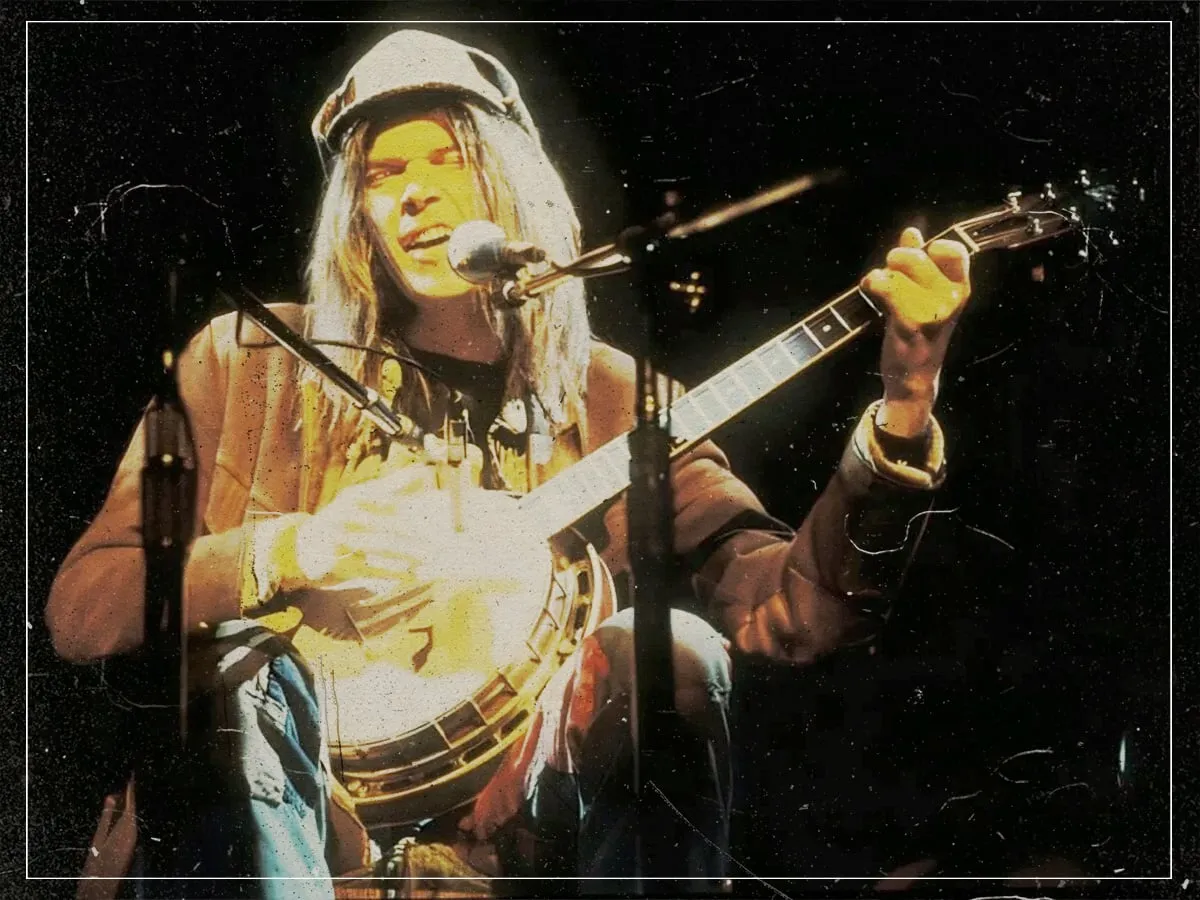
In the sprawling landscape of rock history, few artists manage to carve out a path entirely their own. By 1972, Neil Young had firmly established that he didn’t need the consensus of a band to define his sound, proving himself a mighty fine solo artist defined by an uncompromising, deeply introspective nature.
This powerful sense of independent introspection fueled his songwriting, leading to deeply personal pieces that offered glimpses into his reflective world. One such reflection is the poignant ballad Old Man, a track that felt less like a song and more like a conversation between the self present and the self yet to come.
While the initial vision for the song was deeply intimate—Young crafting the melody and lyrics on his acoustic guitar alone—the realization of its full potential required more than just solo performance. When it came time for production, Young looked to the music industry not for collaboration dictated by external pressures, but for authentic sonic enhancement.
The resulting track needed an element that added depth and character. Perhaps the most distinctive instrumental layer is the elegant banjo line that precedes the chorus, lending the song a spiritual and rustic feel. This particular touch demanded a special voice, one that could elevate the raw emotion without overpowering it.
Enter folk icon James Taylor. Rather than recruiting a session player who would simply adhere to a pre-set vision, Young approached Taylor with a spirit of pure spontaneity. The genius of the arrangement was not a grand plan, but a moment of shared creative freedom.
In that moment, Taylor’s spontaneous presence guided the direction of the track. It was during this spontaneous session that the banjo idea emerged, and it was at that point that Taylor reportedly felt magic was born. As one observer noted, it was a perfect example of Young’s creative flow: he would simply go for the moment and let the elements flow naturally, resulting in something truly excellent.
This unexpected collaboration underscored a fascinating truth about Young’s artistic process: true creativity often flourishes when artists allow the spontaneous presence of their peers to shape the final product, rather than imposing rigid structures. The synergy between Young’s raw vision and Taylor’s effortless talent turned a personal reflection into an enduring piece of folk history.
Buy on Amazon
Credit