The Kinks’ rejection of the Beatles comparison “No, no”
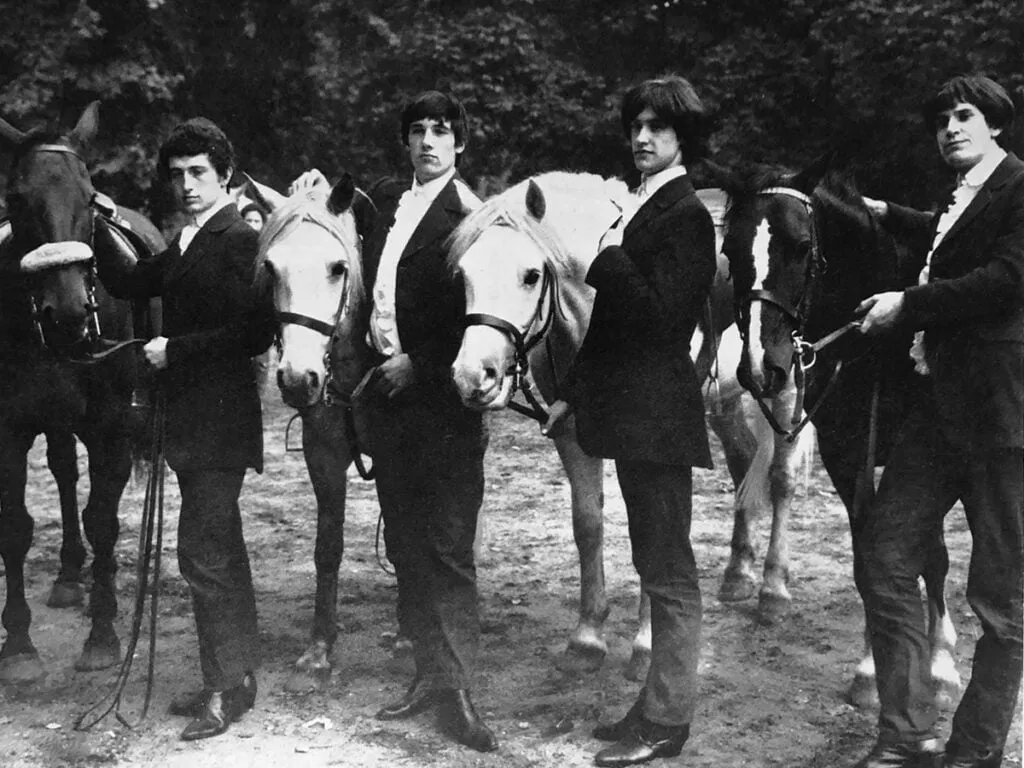
It’s hard to overstate the seismic shift that The Beatles triggered across the United States. Their arrival wasn’t just a musical phenomenon; it was a cultural supernova that fundamentally rearranged the landscape of American music.
When they graced the airwaves on The Ed Sullivan Show, the ripple effect was immediate and profound. Suddenly, the artistic focus in the land pivoted. Musicians across the country stopped pursuing the solitary path of the solo artist and collectively turned their attention toward forming their own bands. It was, quite literally, an overnight revolution in how American music was created and consumed.
The sheer magnitude of this transformation is something figures like Steve Van Zandt have reflected upon. He noted how that moment redefined the creative trajectory of an entire generation, demonstrating that the impact of a group can transcend mere popularity and redefine an entire era.
This massive cultural movement naturally led to comparisons, and when the musical landscape is dominated by one titan, it’s inevitable that other influential acts enter the conversation. This dynamic often played out between the juggernaut of The Beatles and the equally potent, yet distinct, sounds of groups like The Kinks.
For some musicians, this constant comparison created a subtle tension. Even when The Kinks were receiving accolades, the shadow of their comparison to Liverpool’s royalty loomed large. This situation eventually led to friction, as some members of The Kinks sought to establish their own, fiercely independent identity.
Ray Davies, a key voice in the movement, became vocal about this dynamic. While acknowledging the influence of peers, he was determined to ensure The Kinks were judged by their own merits, not merely as footnotes to The Beatles’ legacy. He famously drew a sharp line, insisting that the comparison didn’t define their artistic worth.
Davies argued that while the sound and era overlapped, the substance was fundamentally different. He pointed out that The Kinks possessed a unique identity built on jagged guitar riffs, biting social commentary, and a distinctly English sense of the absurd and the quaint.
He insisted that the influence of other artists should be viewed through their own lens. When faced with the suggestion that their work was reminiscent of The Beatles, Davies responded with a firm assertion of their own uniqueness, stating that they were, in fact, more unpopular than the Liverpool group.
This stance was a demand for recognition on their own terms. Davies sought to ensure that their music, even tracks like Revolver, spoke for itself, free from the gravitational pull of a singular, overwhelming force.
Ultimately, The Kinks carved out a space for themselves. They possessed an identity defined by their own vision, making their place in rock history not as echoes of The Beatles, but as a fiercely unique entity in their own right.
Buy on Amazon
Credit
