Springsteen reveals music and politics are intertwined
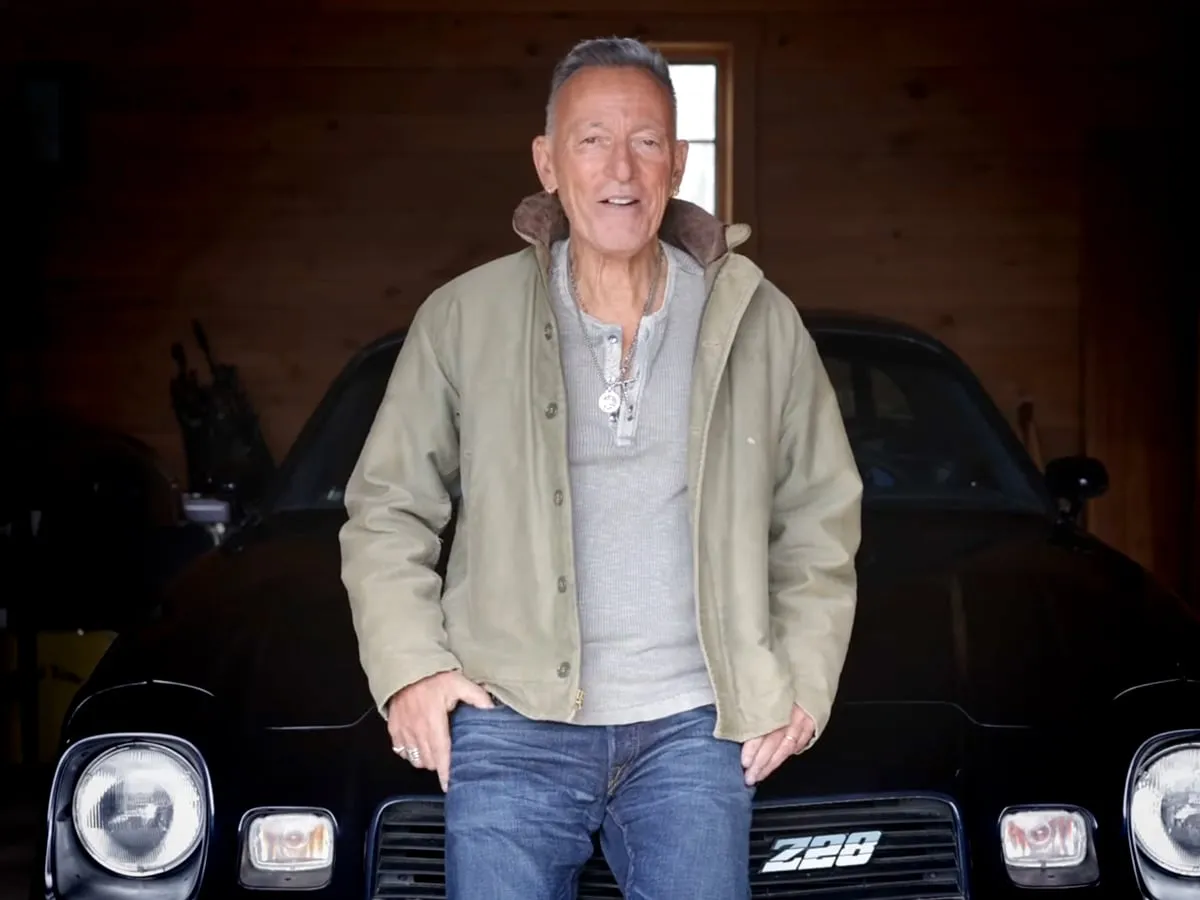
For Bruce Springsteen, the relationship between music and politics isn’t a recent development; it’s a deep-seated truth woven into the fabric of the American experience. In a recent interview, the legendary rock star offered a compelling explanation for why culture and governance have always shared the same space, arguing that what we hear is fundamentally an expression of freedom.
The connection between the arts and public life is often overlooked, yet Springsteen insists that music and politics are inherently intertwined. He posits that genres like rock and hip hop are not just sounds; they are powerful expressions of liberty, a fact that has resonated through generations.
This belief stems from Springsteen’s own history. He began engaging with the political sphere early, starting to vote in 1972 while simultaneously being involved in the Anti-Vietnam War demonstrations. For him, growing up in the 1960s meant that music carried a cultural responsibility, serving as a voice for change across the board.
When asked about using a platform politically, Springsteen reflected on the historical context of the era. He noted that if you had a platform, you used it, and that was expected. It was part of the cultural mandate of the time.
His artistic mission, therefore, is to use his voice to provoke thought about what it truly means to be American—to encourage listeners to reflect on their responsibility to their community and country.
This commitment has naturally led to friction. The relationship between the artist and the political figure often becomes complicated, as seen in the public exchanges that have followed Springsteen’s outspoken stance. In recent years, this dynamic has intensified, leading to public confrontations, such as the exchange with Donald Trump over the use of his music and his views on the administration.
Despite the friction, Springsteen remains focused on the bigger picture. He acknowledges that while some artists may naturally gravitate toward political causes, he doesn’t believe that every artist has to be explicitly political. He points to historical figures like Elvis Presley, James Brown, and Woody Guthrie, arguing that their true impact—in changing the world—came not necessarily from explicit political declarations, but from the powerful cultural force they exuded and the music they performed.
Ultimately, for Springsteen, the enduring power of music lies in its ability to inspire reflection, reminding us that the soundtrack of our lives is inextricably linked to the story of our nation.
Buy on Amazon
Credit
