Nick Cave will never let Morrissey tarnish his work
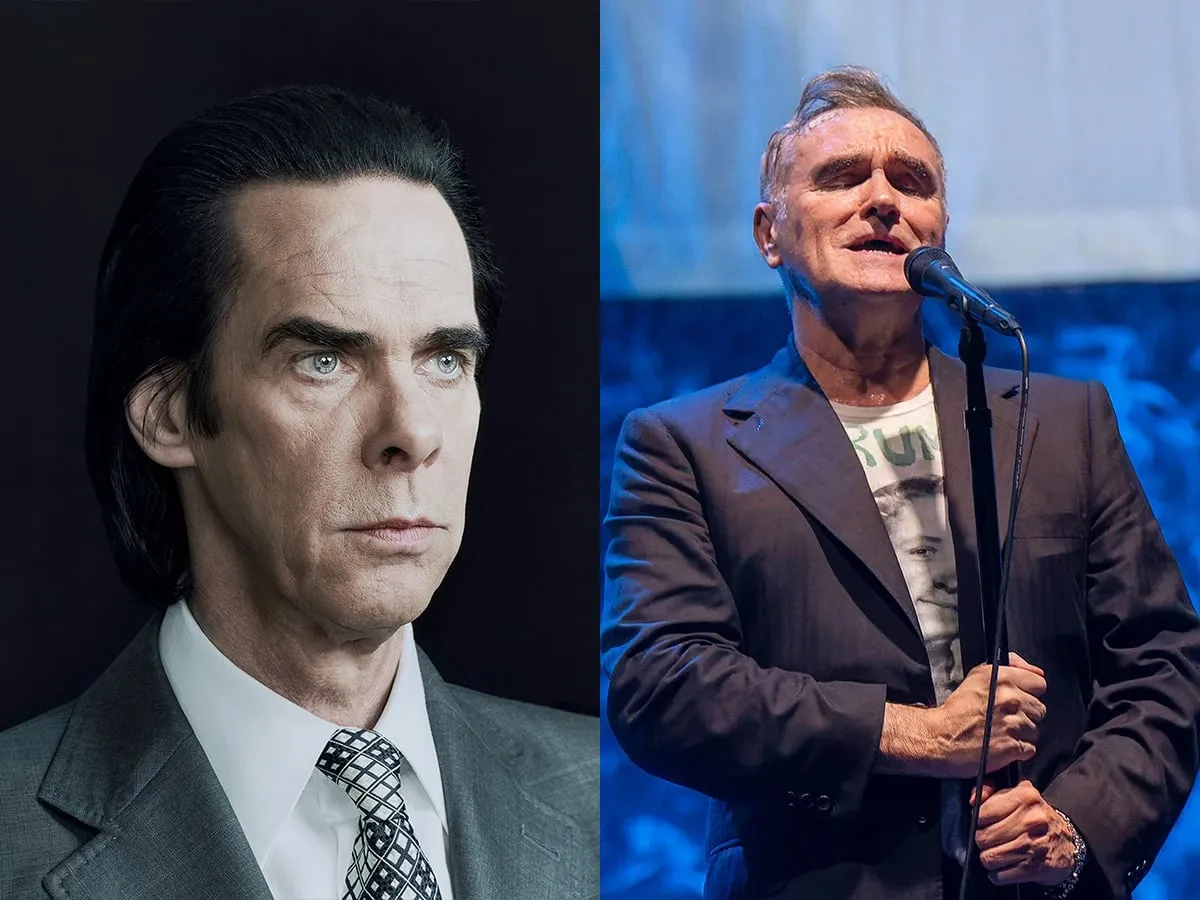
The relationship between an artist and their creation is often fraught with tension, particularly when the creator’s personal views clash with the work they produce. While some view art as a pure expression divorced from the artist, others argue that the creator’s context inevitably shapes the final product. This tension became a significant philosophical debate when looking at the legendary pairing of Nick Cave and Morrissey.
Nick Cave, a master of evocative, often brooding songwriting, has long wrestled with the idea of whether an artist’s personal shortcomings should dictate how their work is received. This question reached a fever pitch when considering the legacy of Morrissey, the former frontman of The Smiths, whose public statements often sparked controversy.
In 2019, the debate moved from abstract theory to concrete reality. Cave received a pointed question on a forum asking how one could separate an artist’s earlier work from their present-day persona, specifically how he reconciled Morrissey’s extensive musical catalogue with his increasingly controversial political stances.
The query highlighted the friction between enjoying a musical legacy and confronting the public statements of the creator. Morrissey’s public support for far-right figures and his views on immigration drew intense scrutiny, prompting fans to question whether the music itself should stand separate from the political allegiances of its author.
Cave’s response offered a fascinating insight into the nature of artistic ownership. He argued that the moment a songwriter releases music into the world, they effectively relinquish ownership. The listener subsequently takes possession of the song, infusing it with their own experiences, memories, and emotions. This perspective suggests that a piece of music, which may have provided solace during a difficult period, does not suddenly lose its significance merely because of the creator’s later, debatable opinions.
Despite this nuanced view, Cave acknowledged the importance of Morrissey’s legacy, noting that he possessed a vast and extraordinary catalogue. However, he drew a clear line: defending an artist’s right to express an opinion is not the same as agreeing with it. He recalled a personal encounter where he felt challenged regarding Morrissey’s views on immigration, an exchange that underscored the painful reality of artistic and political divides.
Ultimately, Cave’s core concern was not about forgiving Morrissey or overlooking his controversial remarks, but about a deeper philosophical issue. He questioned why great music should have to suffer the consequences of its creator too. He believed the true tragedy lay in the possibility that cherished songs might be abandoned entirely, simply because of the person who wrote them, rather than the enduring power of the music itself.
Buy on Amazon
Credit