Keith Emerson’s journey to leveling up music for ELP
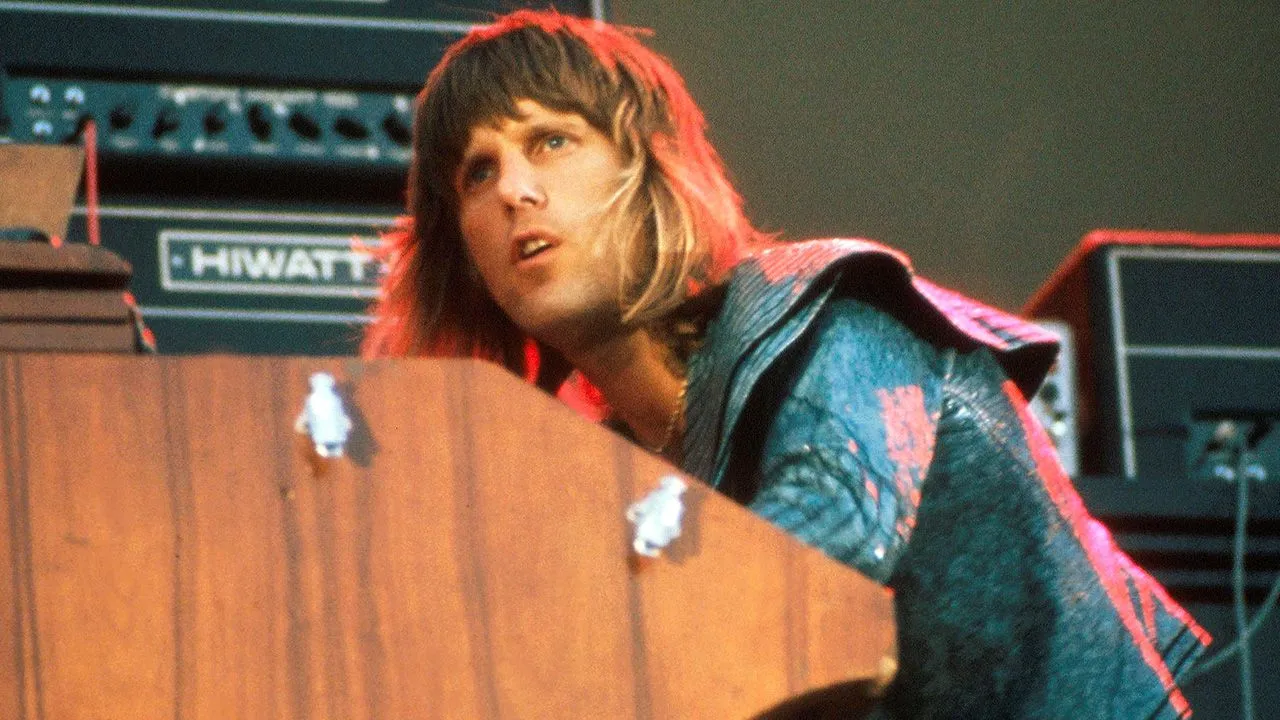
The story of Keith Emerson is not just the tale of a rock musician; it is an epic exploration of artistic defiance, theatrical flair, and the sheer, uncompromising ambition of a true musical visionary. His journey, spanning from survival tactics in childhood to commanding the stage at the height of progressive rock, is a masterclass in making noise and demanding attention.
From his earliest days, Emerson was immersed in music. He learned to play the piano not just as a hobby, but as a means of survival, absorbing classical influences like Beethoven sonatas while navigating the social landscape of school. This foundation was enriched by the raw energy of rock and roll icons such as Jerry Lee Lewis and Little Richard, setting the stage for a uniquely explosive musical personality.
His musical palette expanded rapidly. He was deeply influenced by jazz giants like Dave Brubeck, and in the early 1960s, he experimented with boogie woogie and classical structures, finding early inspiration in recordings made in his parents’ living room. By 1965, as he moved to London and joined Gary Farr and The T-Bones, Emerson began to fuse disparate influences—Bach, Aaron Copland, and Shostakovich—with the emerging sound of rock, while simultaneously mastering the Hammond organ.
Emerson’s approach to performance quickly became legendary and theatrical. During a controversial gig in France, when a fight erupted in the crowd, Emerson famously rocked and climbed on his Hammond organ, coaxing unusual sounds from it to halt the disturbance. This moment cemented his reputation as a performer willing to push boundaries for the sake of art.
This flair for the dramatic led to the formation of The Nice in 1967, alongside PP Arnold, a pairing that exploded onto the scene. Their performances, including a highly publicized appearance at the National Jazz & Blues Festival, garnered significant attention. The Nice released multiple albums and achieved a major hit with their version of Leonard Bernstein’s America.
The evolution continued as Emerson sought new sonic territory. He experimented with unconventional instruments, even sticking knives into the Hammond keys to achieve a unique sustain. He also embraced the revolutionary sounds of the Moog synthesizer, becoming one of the first rock musicians to tour with it, sparking a fascination with electronic soundscapes.
In 1970, Emerson felt ready for a grander statement, leading to the formation of Emerson, Lake and Palmer (ELP). Joining the formidable talents of bassist/vocalist Greg Lake and drummer Carl Palmer, ELP became a powerhouse that defined the progressive movement of the 1970s. The band was defined by Emerson’s stage presence, transforming him into a spectacle that upstaged the guitar heroes of his generation.
The theatricality reached its zenith during their American tour. Emerson’s performance of the piece at the Royal Albert Hall in 1968, involving the symbolic act of burning the Stars and Stripes, demonstrated his willingness to challenge authority. Later, on the 1973-’74 American tour, the band debuted a levitating grand piano at Madison Square Garden, an astonishing feat that left audiences breathless.
Despite the dazzling stage antics, Emerson firmly anchored his legacy in composition. He continually stated that his primary identity was that of a composer, aspiring to be recognized for his artistry rather than simply being an entertainer. He sought to stand alongside musical titans like David Bowie, proving that the most enduring impact is often found in the architecture of sound, rather than just the spectacle of it.
Buy on Amazon
Credit