Deep Purple’s riff rip-off revealed
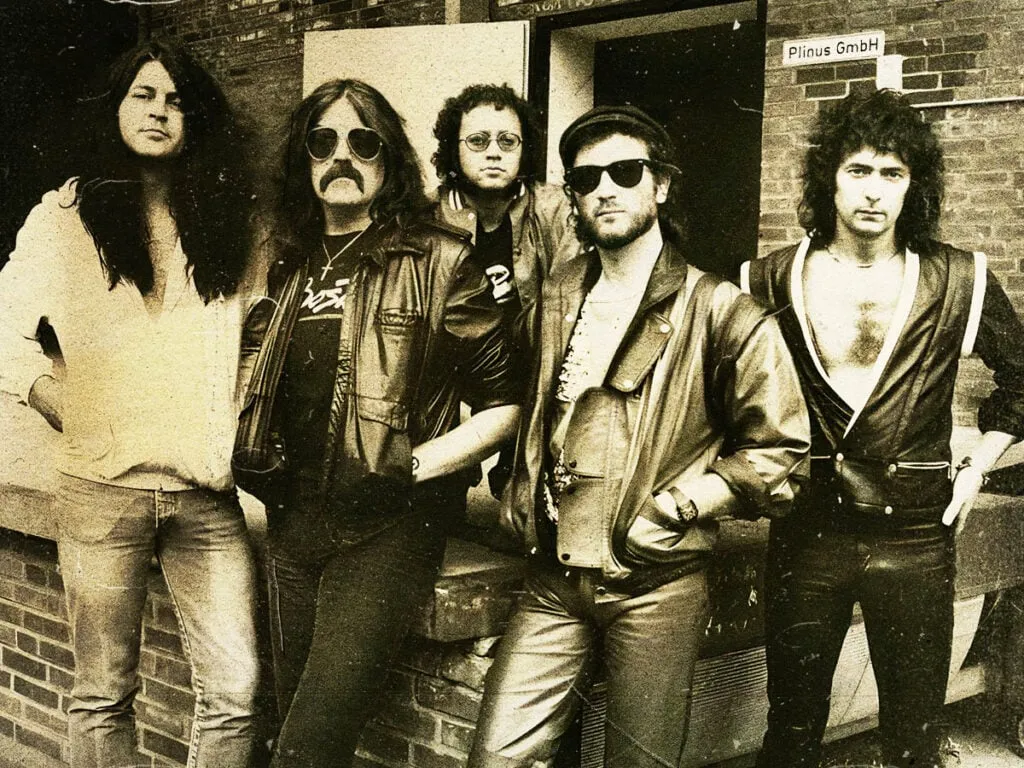
The Accidental Masterpiece: How a Simple Riff Became a Rock Legend
When a beginner picks up their first guitar, the journey into the world of music is often paved with iconic riffs. Whether it’s Nirvana’s ‘Smells Like Teen Spirit’, AC/DC’s ‘Back in Black’, or The White Stripes’ ‘Seven Nation Army’, these hooks quickly enter the musical vocabulary. Yet, among this pantheon of rock anthems, one particular riff stands out as the ultimate entry point: Smoke on the Water by Deep Purple.
This seemingly simple melody, which arrived in 1973 as the final single from the band’s masterful album Machine Head, has cemented its place in music history. It remains the most recognizable tune associated with the legendary hard rockers, and its enduring fame stems largely from its immediate catchiness and intriguing background.
The magic of the riff lies in its accessibility, which makes it a perfect exercise for newcomers. However, understanding the riff requires looking beyond the surface. It is not simply a sequence of notes; it is a masterclass in musical economy. The riff is achieved by moving pairs of notes in parallel fourths, played with the fingers rather than the heavy pounding of conventional power chords. This subtle yet deliberate technique gives the familiar pattern a distinct weight and clarity, setting the stage before the rest of the band even enters.
Ritchie Blackmore, the band’s guitarist, acknowledged the riff’s structural echoes. In a quote, he suggested the progression was based on an inversion of Ludwig van Beethoven’s ‘Symphony No. 5’. While he admitted that the rhythm and order needed significant modification to sound similar, the link to classical structure adds an intriguing layer of depth to the rock foundation.
The story of the riff’s creation is perhaps even more dramatic. The band had planned to record Machine Head at the Montreux Casino in Switzerland. However, their plans were abruptly derailed by a chaotic event. The lyrics detailing the incident reveal that the venue’s famous fire of 1971 had scorched the location. The night before recording, a concert featuring Frank Zappa and the Mothers of Invention took place in the casino’s theatre, during which an audience member fired a flare gun at the ceiling. Although no major injuries occurred, the incident resulted in near-total destruction of the casino and most of the Mothers’ equipment.
This chaotic backdrop provides a fascinating contrast to the musical artistry at play. While the riff itself carried classical inspiration, the final sonic identity was shaped by the context of the performance and the raw, untamed energy of the rock scene.
Furthermore, the riff’s identity is not solely defined by the notes themselves, but by the arrangement, rhythm, and surrounding instrumentation. When comparing the riff to other musical styles, such as the melodic shapes found in Carlos Lyra’s ‘Maria Moita’, the differences are striking. This comparison highlights a crucial lesson in music: how a handful of notes can transform entirely depending on the style and performers who surround them.
Ultimately, the enduring power of ‘Smoke on the Water’ is a testament to this principle. It shows that true musical genius lies not just in imitation, but in the ability to fuse disparate elements—classical structure, rock energy, and accidental history—into something unforgettable. The riff is more than just a catchy hook; it is a remarkable story about how context gives meaning to the melody.
Buy on Amazon
Credit
