9 Artists Nick Cave personally disappointed
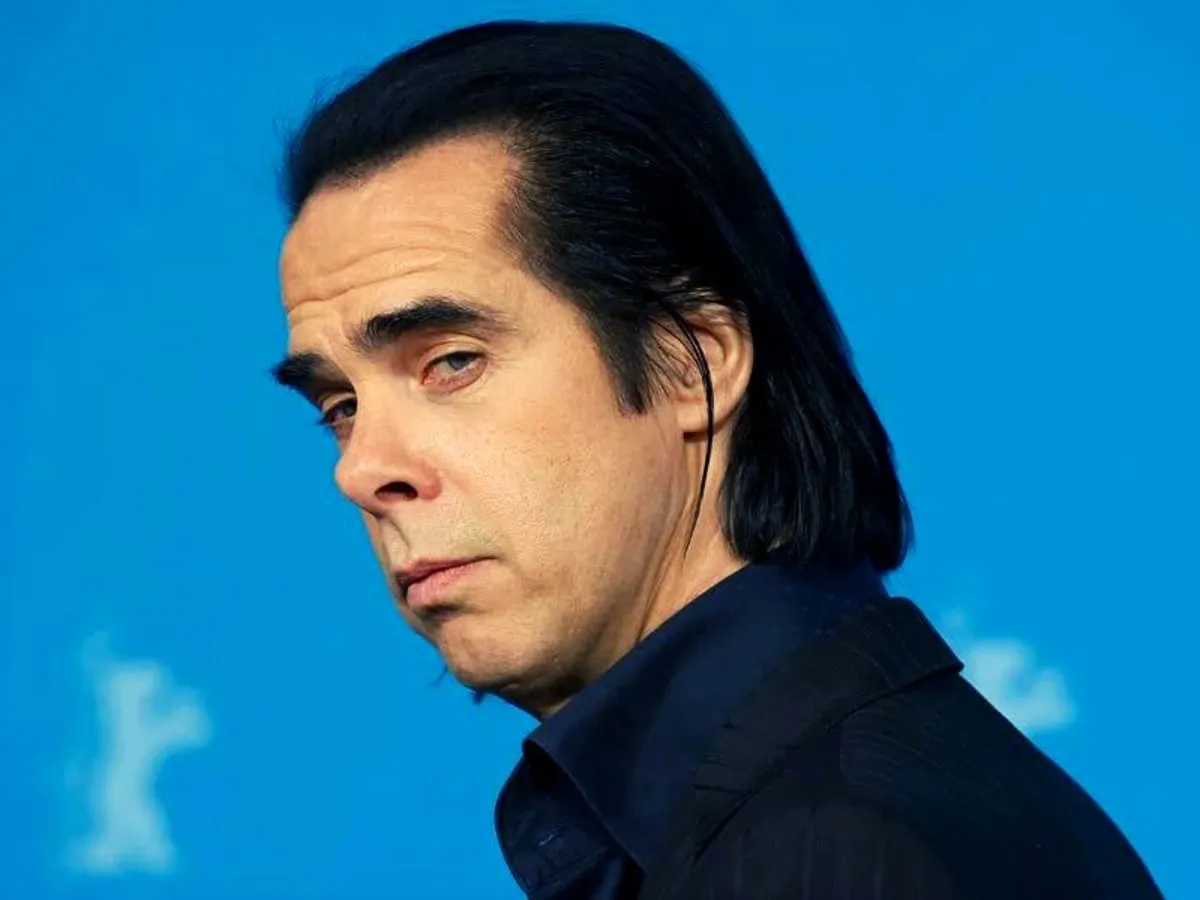
For artist and devoted fan Nick Cave, the relationship with his heroes is less about mere admiration and more about a deep, shared understanding of the human condition. He has consistently spoken and written with profound reverence for musical figures like Leonard Cohen, finding a remarkable resonance between their work and his own explorations of love, desire, faith, mortality, and mental turmoil.
This reverence is vividly captured in his writing, particularly in the extended poem The Sick Bag Song. It recounts the transformative effect of discovering Cohen’s voice in his youth, capturing a moment of pure, almost hidden, immersion: “Leonard Cohen will sing, and the boy will suddenly breathe as if for the first time, and fall inside the laughing man’s voice and hide.”
Through this lens, Cave views certain artists not just as creators, but as guides who have shaped his perspective. He identifies a collection of songs—his hiding songs—that deal exclusively in darkness, obfuscation, concealment, and secrecy. These songs are intentionally dark, serving to protect him from what he perceives as the corrosive glare of the world.
In a reflective look at his musical history, Cave noted that while a lifespan might yield many songs, only a select few truly stand apart. In a 2019 retrospective, he named his top ten favorites, including Cohen’s Avalanche, alongside tracks from Bob Dylan, Nina Simone, Van Morrison, Neil Young, Morrissey, Brian Eno, and Patti Smith.
Yet, this devotion is not without complexity. In a later reflection, Cave admitted that some of these admired figures, while forming a “confederacy of excellence” in his eyes, had, at times, disappointed him. He acknowledged that these artists often followed their own confounding paths, diverging from the expectations he held for them.
The conversation then turns to the elusive line between art and artist. For Cave, recognizing that these figures are multifaceted human beings, his respect for their work stems from their capacity to reveal authenticity. It is this authenticity that keeps him captivated, assuring him that these geniuses, regardless of their personal choices, remain fully and acutely authentic in a world that often feels devoid of true genius.
Consider Nina Simone, whom Cave spoke of with immense devotion. He saw her music permanently woven into his soul, describing her as “hugely important to me. She’s the real thing.” Though he admitted she was both “beautiful” and “terrifying,” she stood as an artist that he would forever worship.
Ultimately, the fascination lies in the unpredictability of human genius. Cave recognizes that true artistic power lies in the multifaceted nature of the artist, allowing their work to serve as a conduit for profound truths, regardless of whether those truths align perfectly with the observer’s personal beliefs.
Buy on Amazon
Credit