5 Frank Zappa songs too weird for him
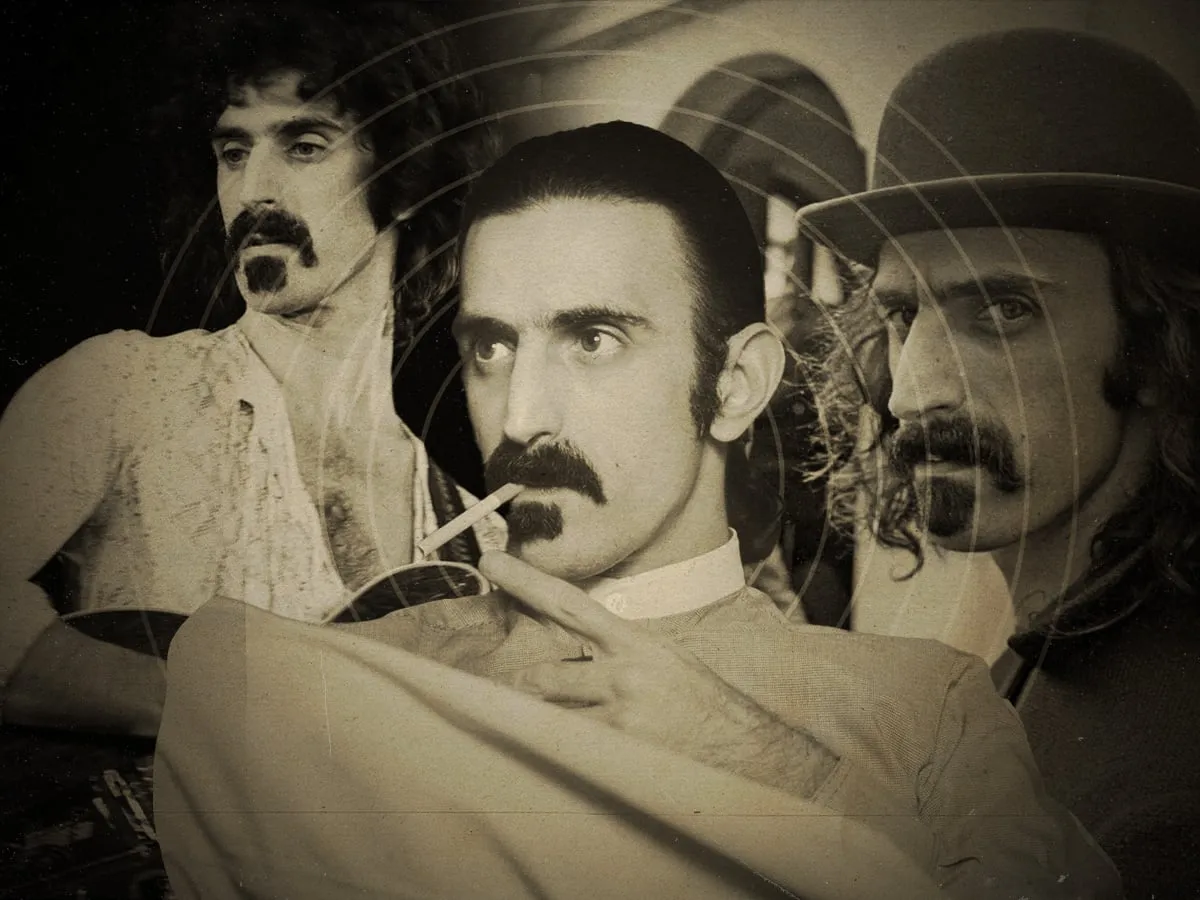
Is Frank Zappa a musical titan, a true genius, or an utterly bewildering anomaly? The answer, as always, remains deliciously up for debate. But before we settle the score, we have to look at the unique path that led him there: a career built on radical self-invention, played by no rulebook, and propelled by an undeniable, magnificent sense of the absurd.
The most telling aspect of Zappa’s life and work is his status as a completely self-taught musician. This fact is the key to unlocking his legacy, revealing how he carved out a universe entirely his own. While some might view this freedom as a sign of boundless creativity, others might see it as sheer flightiness. Either way, the result is a man who lived entirely on the axis of his own strange gravitational pull, refusing to be confined by conventional musical expectations.
In a world that demands adherence to established genres, Zappa didn’t just play within the lines; he treated them like suggestions, pushing musical boundaries into realms no one else dared to explore. He embodied the definition of an oddball, a figure who found his true stage not in polite concert halls, but in the wildest depths of sonic possibility.
But even for a musician operating at this level of surrealism, there are moments when the creative impulses take flight so far that they veer into delightfully bizarre territory. We’re not talking about mere eccentricity; we’re talking about tracks that defy easy categorization and push the limits of what rock music should sound like. Here are five examples of Zappa’s musical excursions that prove he was always operating on a frequency few could follow.
The Five Songs That Defy Convention:
One such sonic adventure is ‘Dwarf Nebula Processional March & Dwarf Nebula’. Taken from the album Weasels Ripped My Flesh, this piece immediately throws listeners into a bizarre landscape, largely because it sheds the constraints of conventional lyrics. Instead of melody and verse, Zappa employed what can be described as a distortion machine, where sounds like white noise, brown noise, pink noise, and gray noise were meticulously injected into the mix, creating a rhythmic, chaotic tapestry.
Next, we dive into the raw and unsettling darkness of ‘The Torture Never Stops’. Appearing on the album Zoot Allures, this nine-minute epic plunges the listener into a narrative about imprisonment and psychological torment. While some might see this as a cynical summation of the world’s cruelty, the sheer intensity of the sound—a warbling tale accompanied by intermittent, disturbing vocalizations—demands attention and forces a confrontation with uncomfortable realities.
Venturing into the cosmic, Zappa’s exploration of the vastness of space is equally mind-bending. The track ‘The Radio is Broken’ from The Man from Utopia offers an existential journey, contemplating the immensity of the cosmos while simultaneously expressing a deep-seated fear of the unknown—from ‘germs from space’ to the ‘blobulent suit.’ It’s a sonic tapestry that manages to be both grand and deeply paranoid.
Then there is a turn into the utterly inappropriate, which perfectly encapsulates Zappa’s willingness to embrace the shocking. The song ‘The Illinois Enema Bandit’ tackles a horrific real-life criminal case from the 1970s with a distinctly mocking, satirical tone. Rather than shying away from the subject matter, Zappa used the absurdity of the situation to score a piece that is undeniably strange, proving that sometimes the strangest commentary is the most effective.
Finally, Zappa masterfully channeled the inherent crudeness of human experience into art with ‘Broken Hearts Are For Assholes’. This track serves as a blunt, unapologetic tool for dealing with emotional turmoil. It cuts straight to the point, using sharp, direct language to tell listeners exactly how to deal with heartbreak, offering a wry, if abrasive, piece of advice that cuts through the usual sentimental fluff.
Through these sonic experiments, Frank Zappa didn’t just create music; he constructed a vibrant, wonderfully chaotic universe where the rules were constantly being rewritten. Whether you view him as a genius or an oddball, the undeniable truth is that he owned every wild note he played, leaving behind a legacy that remains as uniquely, brilliantly strange as he was.
Buy on Amazon
Credit